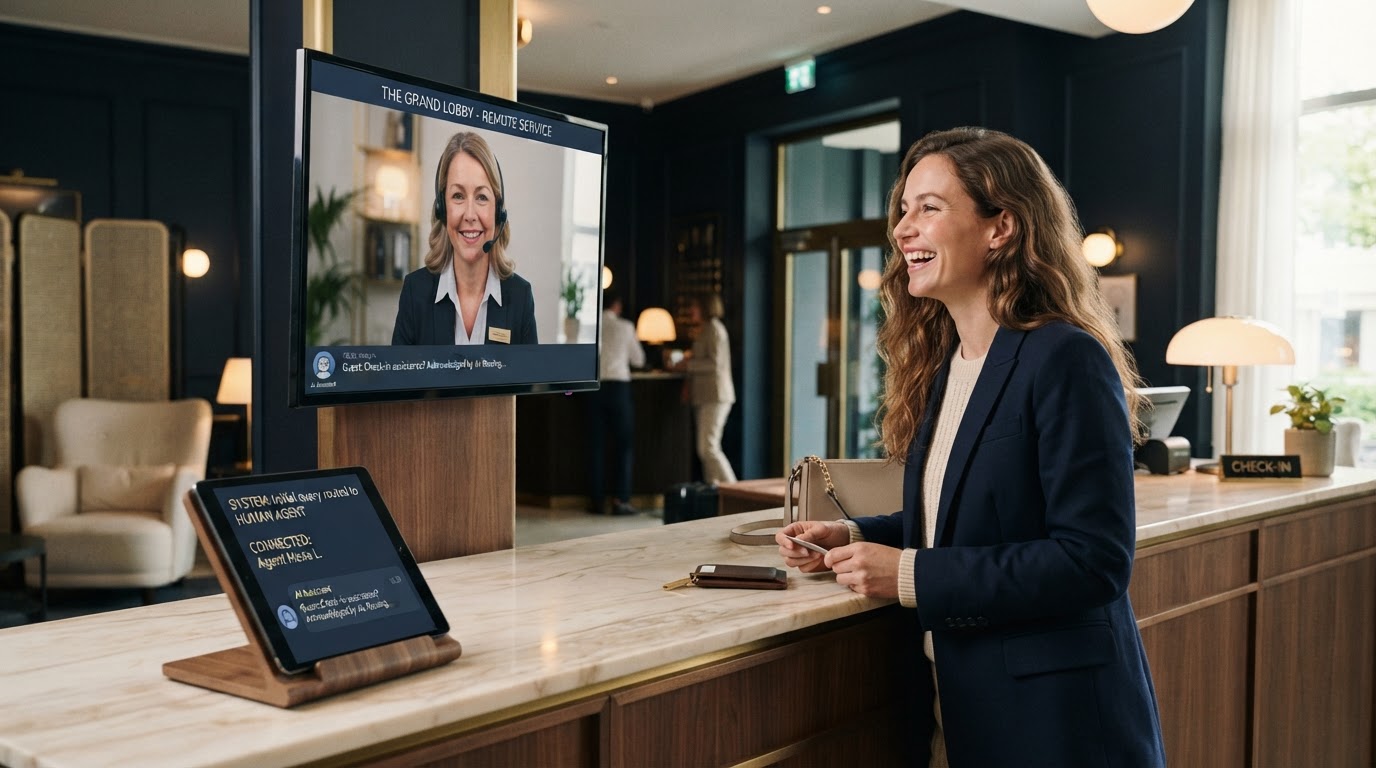
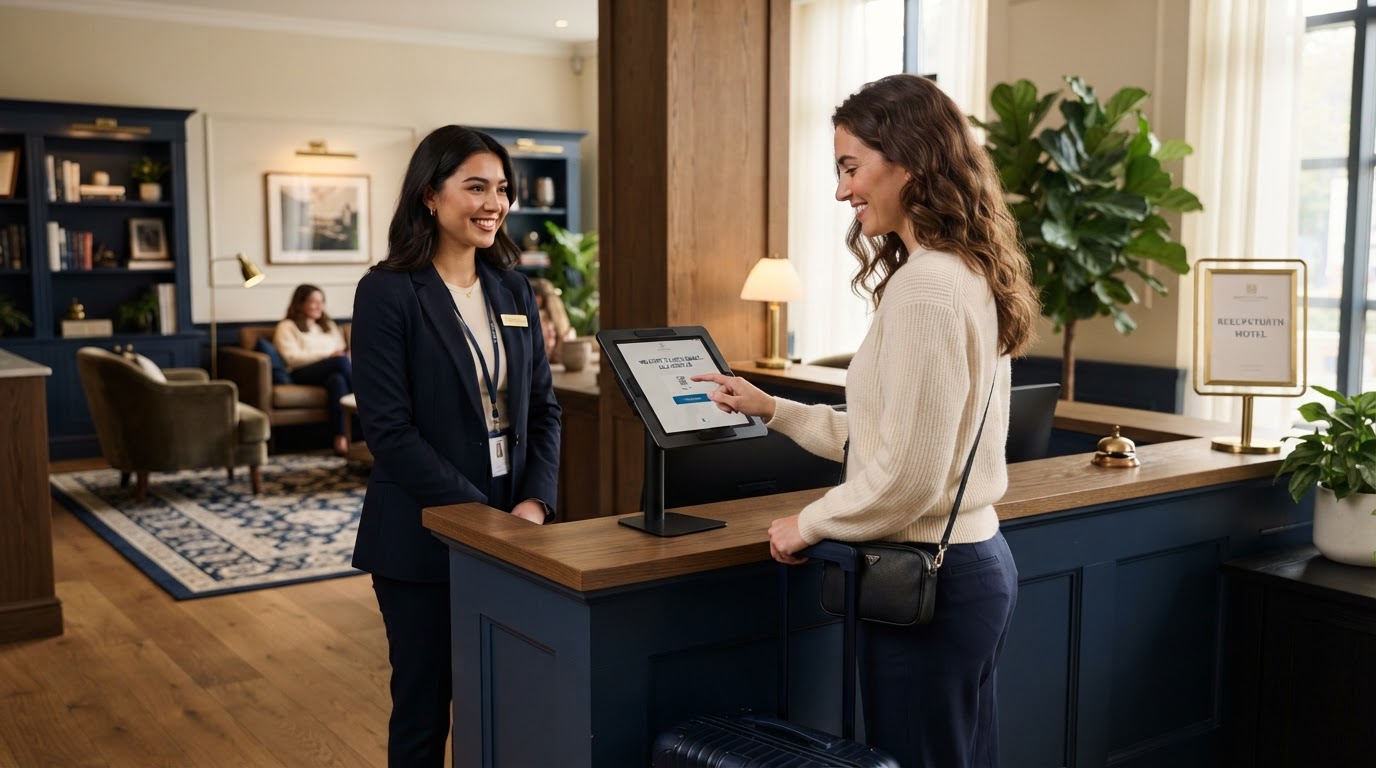
Self check-in is no longer a novelty in modern hospitality. Guests expect speed and independence – but they also expect someone to be there when something goes wrong. A key safe on the wall has not been enough for a long time.
Guests want speed, not queues
Whoever stands in front of a closed door at 10 p.m. after a long journey does not want to study a three-page instruction. They want to get in, reach the room and go to bed. Good self check-in means: getting the guest from the portal to the room in under two minutes – while still handling every formality cleanly.
The three phases of a successful self check-in
1. Before arrival
Days in advance the guest receives their access details, a clear route description and the answers to the most frequent questions – in their language. Building trust here saves half the calls on arrival day.
2. On arrival day
Checklist: virtual reception in 14 days
Download our proven checklist with onboarding plan — start risk-free.
The code works, the door opens, the room is ready. And if not: a real person is on the phone in under 90 minutes. It is precisely these 90 minutes that decide whether a guest experiences the check-in as comfortable or as frustration.
3. After check-in
The first impression counts. A short welcome message, an explanation of the key amenities and the confirmation that someone is reachable at any time – that turns a self check-in property into a full hotel feeling.
Where self check-in without a remote reception fails
- Codes don't work and no one answers – the guest leaves a bad review.
- Foreign-language enquiries go unanswered because no one on site is responsible.
- Special requests from the PMS go unnoticed because no one monitors the system.
- Complaints only land the next morning – by then the guest is long gone.
Self check-in works best as a duo: the technology brings the guest to the room autonomously, the remote reception handles everything that needs a human in between and after. The guest stays alone – but never left to themselves.